TL;DR
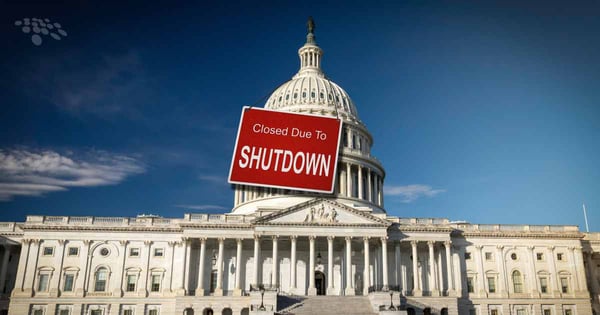
- Imminent Disruption: Government shutdowns in the United States freeze federal operations - delaying contract approvals, obligation fulfillment, compliance verification, and agency funding.
- Operational Exposure: If you're relying on manual contract workflows, you may be facilitating invisible liabilites, unmonitored force majeure triggers, severe supply chain milestone delays, and more.
- Automated safeguards: Contract lifecycle management (CLM) software helps mitigate structural volatility. It fosters and centralizes visibility, automates milestone tracking, makes reporting on the contract repository easy, and scans risk clauses.

What Happens to Contracts During a Federal Shutdown?
We are all thrust into attention by federal shutdowns to some degree, in both our personal and professional lives. The problem is when federal gridlock shifts from a political headline into a tangible supply chain crisis. A critical first step in navigating a US government shutdown is differentiating between essential government services that continue and non-essential operations that halt immediately.
But what about entities that do not have contracts with the federal government? If you're one such organization, you're still at risk. Non-contracted organizations face increased risks during government shutdowns primarily due to supply chain payment disruptions, stalled SBA loan (Small Business Adminsitration loan) processing, and reduced spend by affected federal organizations that would otherwise spend money on goods or services provided by the non-contracted entity. Furthermore, the absence of federal personnel creates immediate backlogs in certifications, permits, and regulatory audits.
The point is this: everyone is affected by federal government shutdowns. So what next? It's time to transition from a reactive, "wait-and-see" posture to a proactive, technology driven continuity strategy to mitigate undue contract risk.
3 Hidden Vulnerablilities Triggered by Government Closures
How to Identify Ambiguous Force Majeure Language
If you are not a learned lawyer, you may be thinking: wouldn't a government shutdown be considered a force majeure event? Well, the answer actually tends to be no. Standard force majeure clauses rarely mention political standstills or administrative delays because courts interpret these clauses narrowly, reserving them for unforeseeable, catastrophic events (like natural disasters or wars) rather than government shutdowns, which are seen as routine business risks. Instead, legal professionals and the courts tend to handle government shutdowns through dedicated "Extension of Time" clauses.
Missing critical, non-negotiable agency filing windows can accidentally void broader contractual protections, so we recommend using automated text-search tools to instantly parse, extract, and categorize force majeure wording across thousands of active agreements.
Tracking Vendor Delivery Failures and Supply Chain Gaps
Your operations are only as resilient as your most vulnerable vendor. Modern B2B supply chains rely on complex webs of Tier 1 and Tier 2 suppliers, many of whom have hidden government dependencies. A tier-2 supplier might rely on federal land permits, small business loans, or specialized government clearances to manufacture a component your business needs.
When a shutdown breaks these dependencies, a domino effect begins. Manual tracking systems, such as contract management spreadsheets and shared network folders, utterly fail to cross-reference vendor obligations with real-time geopolitical disruptions. You cannot easily see which commercial contracts are tied to a stalling supplier.This data disconnect also breeds an accountability gap. Disingenuous vendors may use the public news of a government shutdown as a convenient excuse for delivery failures that were actually caused by internal operational incompetence. By deploying a dynamic vendor dashboard, teams can score supplier risk levels, monitor real-time performance metrics, oversee vendor contracts, and immediately surface alternative vendor networks to maintain operational momentum.

Preventing Revenue Leakage When Federal Funding Freezes
When the federal government stops spending, cash flow dries up throughout the commercial ecosystem. Discretionary grants and federal disbursements freeze mid-cycle. If your revenue model relies on public-private partnerships or government-backed financing, this liquidity crunch poses an immediate threat.
The danger compounds when businesses find themselves caught in a penalty trap. If incoming federal capital stalls, your organization may struggle to settle accounts payable with your own upstream vendors. Without protective language, those upstream vendors can legally hit your business with late fees, interest penalties, suits, or contract terminations.
Manually auditing hundreds of contracts to find payment grace periods or milestone flexibility drains critical internal resources. Legal teams waste valuable hours digging through PDFs instead of managing the actual business crisis. The solution lies in setting up tiered, automated alert systems within a centralized contract repository. These systems automatically flag upcoming fiscal deadlines, such as 30, 60, and 90 days in advance, giving finance leaders the visibility needed to renegotiate payment terms before a technical default occurs.
Why AI Contract Management is Essential for Risk Mitigation
Surviving periods of national disruption requires deep visibility into your contract data. Legacy workflows that treat contracts as static paper documents, instead of dynamic assets, leave companies vulnerable to sudden market shifts. Modern AI-powered CLM platforms turn passive legal text into actionable operational intelligence.
- Automated Contract Auditing: Natural language processing (NLP) engines can scan entire legacy repositories within minutes, automatically isolating public sector links, government clauses, force majeure terms, and federal compliance requirements.
- Dynamic Risk Scoring: Advanced algorithms help assign real-time risk weightings to and insights into active agreements based on their exposure to specific closing federal agencies, allowing executives to prioritize mitigation efforts.
- Smarter Compliance Workflows: Instead of relying on manual email threads, automated CLM platforms route tasks dynamically to backup approval paths when a government bottleneck is flagged.
- Version Control and Audit Trails: When a crisis forces emergency contract amendments, digital platforms secure a clear, unalterable digital footprint of all modifications, virtually ensuring post-shutdown compliance remains intact.
- Proactive Lifecycle Visibility: Intelligent alerts transform contracts into living documents that actively warn users of upcoming operational threats, regulatory expirations, obligation due dates, and renewal deadlines.
How to Protect Operations from Federal Volatility
Protecting your organization from federal volatility requires immediate, structural action before the next political gridlock begins.
- Assess Current Exposure: Conduct a comprehensive audit of your active contract repository to map out every agreement containing federal dependencies, regulatory milestones, force majeure clauses, or government funding.
- Build the Operational Contingency Plan: Draft standardized emergency addendums and alternative vendor routing protocols ahead of time so they can be executed instantly during a crisis.
- Deploy Modern Infrastructure: Transition away from legacy storage methods. Waiting for a federal shutdown to erupt before upgrading your contract management tools guarantees severe operational friction and avoidable financial losses.
Operational resilience is attainable. Secure your company's supply chain, revenue streams, contract deliverables, standing, and legal compliance.
Book a free demo of CobbleStone today to comprehensively optimize insurance contract management! It's free - and risk-free.

*Legal Disclaimer: This article is not legal advice. The content of this article is for general informational and educational purposes only. The information on this website may not present the most up-to-date legal information. Readers should contact their attorney for legal advice regarding any particular legal matter.