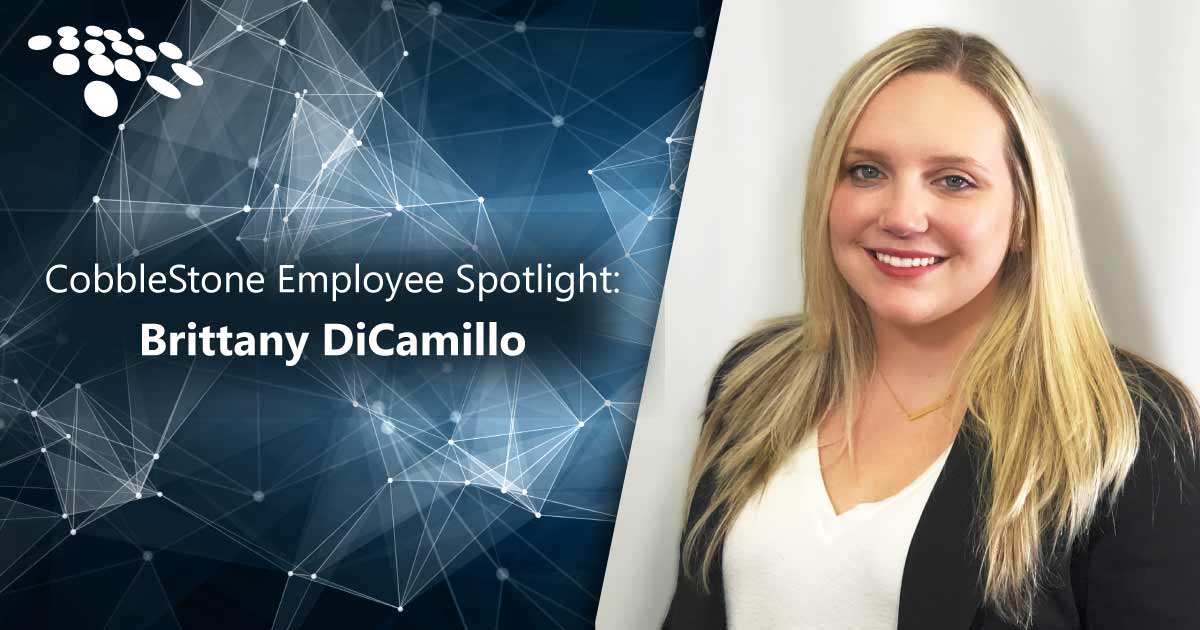
Brittany DiCamillo - a Senior Account Manager at CobbleStone Software - has recently won the award of "2020 Account Manager of the Year" – and she doesn’t plan on pumping the brakes in 2021. Brittany has been a member of the CobbleStone Software team since 2010, and has been instrumental in the company's evolution into the global contract management software key player that it is today. We caught up with Brittany on the heels of her win to talk about her experience at CobbleStone Software, as well as how she has become a Contract Insight® expert over the past 10+ years.
Sean Heck

Recent Posts
Cobblestone Employee Focus: Brittany DiCamillo, Senior Account Manager
Topics:
CobbleStone Employee Spotlight
Continue Reading
Contract Insight® Fast: A Contract Management Software Crash Course

Read this blog for a rapid, high-level, general overview of CobbleStone Software's contract management software suite - Contract Insight®, its purpose, and some of its key features.
Topics:
CobbleStone Software
Contract Insight
Contract Management Software
electronic signatures
eSignatures
VISDOM AI
Contract Artificial Intelligence
Contract Management AI
AI-Powered Contract Management Software
AI-Based Contract Management
electronic signature software
IntelliSign
Contract Intelligence
Continue Reading
CobbleStone Software Finishes 2020 With Record-Breaking Growth

CobbleStone Software is proud to announce that we have finished 2020 with record-breaking growth. From expanding our client base to bringing new innovations to the forefront of contract management software and more, here are some noteworthy CobbleStone Software achievements from 2020.
Topics:
CobbleStone Software
Contract Insight
CobbleStone Conference
CobbleStone Software Integrations
CobbleStone Speaking Engagements
Contract Insight® Software Updates
CobbleStone Software PC Helper Apps
Continue Reading
Embracing Contract Automation for Simpler Contract Task Management

The health of the contract lifecycle relies upon efficient contract task management. Manual methods for completing contract tasks relating to pre-award and post-award contract lifecycle management can be error-prone, inefficient, and tedious - potentially decreasing your organization's ROI. Read this blog to learn how your organization can embrace streamlined and future-minded contract task management with AI-powered contract management software.
Topics:
automated workflow
Contract Compliance
Contract Compliance Software
Contract Lifecycle Management
contract negotiation
contract writing
contract writing solution
E-signatures
contract risk
CLM Software
Contract Management Workflow
OFAC
contract management automation
contract automation
Continue Reading